FTSE 100 FINISH LINE 27/5/26
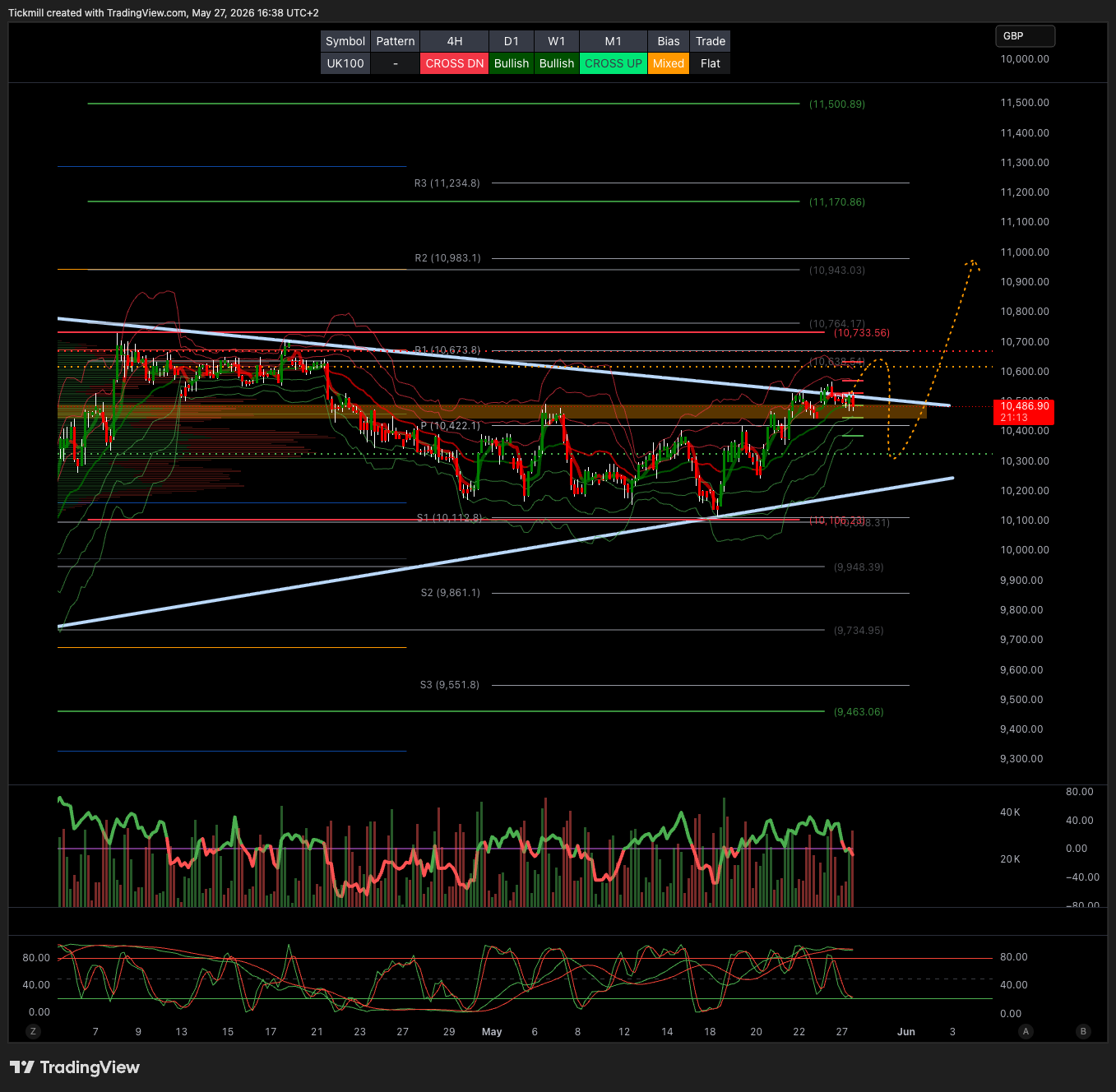
FTSE 100 FINISH LINE 27/5/26
Streak Stalls as Defence Strength Meets Gilt Pressure
UK equities lost momentum on Wednesday, with the FTSE 100 down 0.35% after an earlier attempt to extend its winning streak to an eighth consecutive session faded. Softer oil prices initially helped risk appetite, as hopes of progress in the Iran conflict reduced some immediate inflation concerns, but the benchmark ultimately struggled to hold gains as weakness in energy heavyweights and persistent gilt-market pressure weighed on the tape. The broader market tone was more mixed than the headline suggested. Midcaps continued to show pockets of strength, with the FTSE 250 supported by upbeat corporate updates and a more constructive view on the Bank of England rate path. Still, the late-session reversal in the blue-chip index highlighted the market’s fragile balance: investors are willing to reward specific earnings stories but remain cautious on the UK macro and political backdrop. Defence names were among the clearest winners ahead of the signing of a new UK-Poland defence and security treaty, part of Prime Minister Keir Starmer’s push to deepen ties with European allies. Rolls-Royce gained around 2.0%, Chemring rose 2.7%, and the broader defence sub-index added about 1.3%. That strength reinforced one of the market’s most durable themes: investors continue to pay up for defence and aerospace exposure where government spending visibility, geopolitical demand and earnings momentum remain aligned.
The macro backdrop offered some support, but not enough to keep the FTSE in positive territory. Softer crude prices, driven by hopes of progress in US-Iran talks, reduced some of the immediate inflation pressure that has been hanging over UK assets. Traders are now pricing in one 25 basis-point Bank of England rate increase by year-end, with around a 50% probability of a second move. Meanwhile, grocery inflation slowed to 3.1% in the four weeks to May 17, the weakest pace since December 2024, suggesting the full inflationary impact of the Iran conflict has not yet reached supermarket shelves. But lower oil was a double-edged sword for the FTSE 100. The relief in crude prices came at a cost for the index’s energy heavyweights, with Shell and BP both down around 2%, dragging on the benchmark and helping turn an early advance into a negative finish. Midcaps supplied some of the day’s strongest single-stock stories. Hollywood Bowl surged nearly 15%, topping the FTSE 250 leaderboard after reporting higher spend per game across its UK and Canadian operations and announcing a new £5 million share buyback. Pets at Home climbed 6.2% after saying sales returned to growth in the fourth quarter and that momentum had accelerated since. Separately, Amazon reaffirmed Britain’s strategic importance, saying it invested more than £15 billion in the UK during 2025, keeping it on track for its broader £40 billion investment target through 2027 across sites, studio operations and drone delivery trials.
But beneath the equity market’s selective resilience, gilts continue to flash a warning. Since Labour took power, long-end UK yields have drifted higher, and the move cannot be explained entirely by global rates, local policy expectations or inflation. The UK 10-year term premium has shown a historically high beta to global rates, but the persistence of the move points to something more domestic: expectations of a more expansionary fiscal stance and a rising political risk premium. Those concerns have sharpened since the May local elections, where Labour lost more than half the seats it was defending, fuelling leadership speculation and fears of a further leftward policy shift. That political layer matters for asset allocation. Andy Burnham, seen as the left-most among likely successors, has emerged as the front-runner in leadership speculation, and market-implied probability data have been associated with a meaningful share of the recent residual term-premium increase — estimated at around 20 basis points over the past quarter. f those probabilities continue to rise into the Makerfield by-election and a Burnham premiership becomes fully priced, estimates suggest scope for a further 40 basis-point increase in the 10-year term premium. Burnham has tried to reassure markets by stressing continuity with the fiscal rules, but for now that has not meaningfully unwound the premium embedded in gilt yields.
Finish Line; The FTSE’s eight-day climb ran into resistance, with the benchmark slipping 0.35% as energy weakness and gilt-market anxiety outweighed defence gains, midcap strength and softer oil-driven rate relief. The tape still has leadership — particularly in defence, aerospace and stock-specific midcap winners — but the broader rally is being asked to climb with a heavier backpack. For now, lower crude and better corporate updates are helping; whether the FTSE can regain its upward stride depends on whether Westminster can stop adding basis points to the back end of the curve.
TECHNICAL & TRADE VIEW – FTSE100
Daily VWAP Bullish
Weekly VWAP Bullish
Above 10500 Target 11000
Below 10100 Target 9469
Disclaimer: The material provided is for information purposes only and should not be considered as investment advice. The views, information, or opinions expressed in the text belong solely to the author, and not to the author’s employer, organization, committee or other group or individual or company.
Past performance is not indicative of future results.
High Risk Warning: CFDs are complex instruments and come with a high risk of losing money rapidly due to leverage. 68% and 74% of retail investor accounts lose money when trading CFDs with Tickmill UK Ltd and Tickmill Europe Ltd respectively. You should consider whether you understand how CFDs work and whether you can afford to take the high risk of losing your money.
Futures and Options: Trading futures and options on margin carries a high degree of risk and may result in losses exceeding your initial investment. These products are not suitable for all investors. Ensure you fully understand the risks and take appropriate care to manage your risk.
Patrick has been involved in the financial markets for well over a decade as a self-educated professional trader and money manager. Flitting between the roles of market commentator, analyst and mentor, Patrick has improved the technical skills and psychological stance of literally hundreds of traders – coaching them to become savvy market operators!